
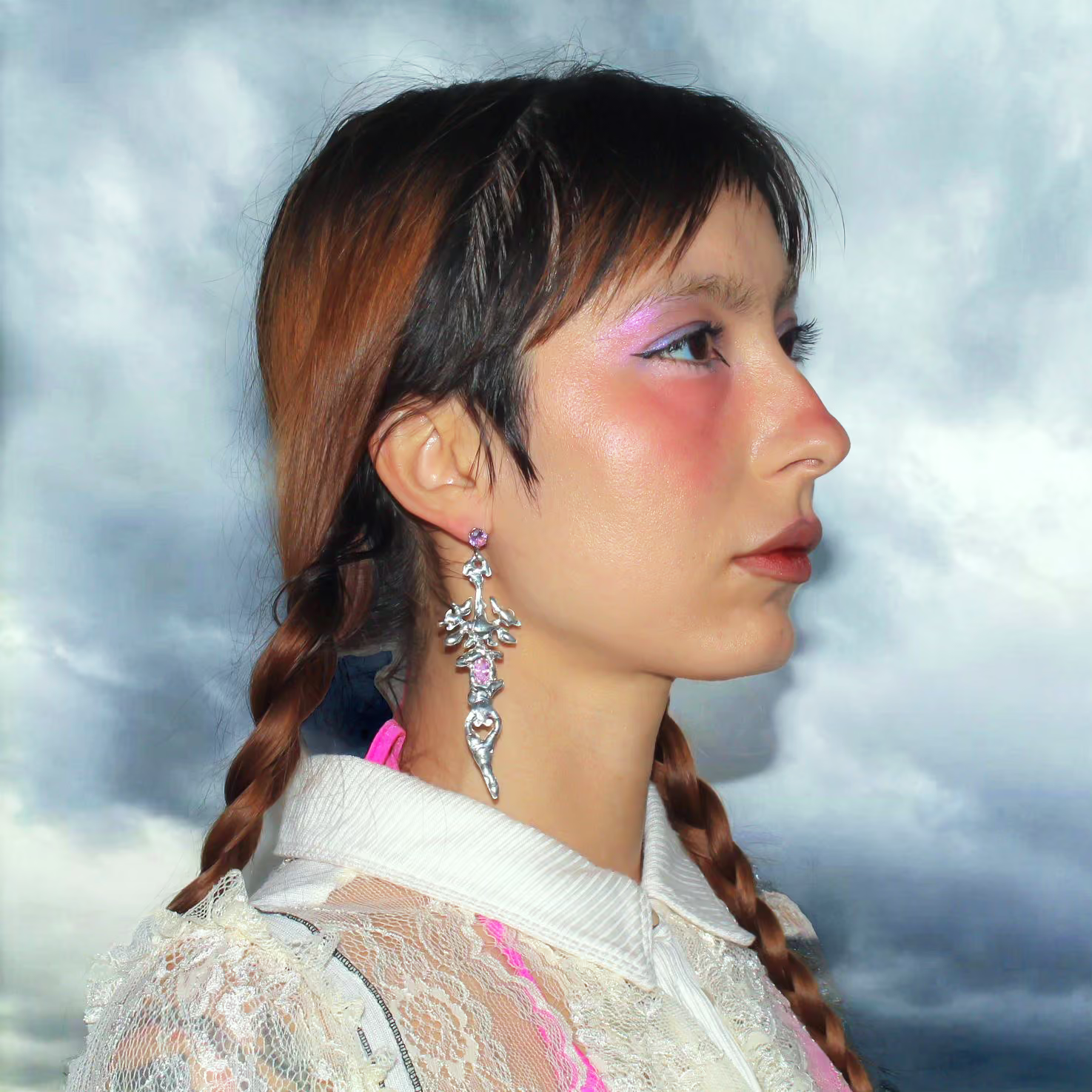
Art Lessons with Liz

Liz is an interdisciplinary artist and educator whose work spans sculpture, video, installation and experimental media. Her practice is rooted in material experimentation, collaboration, and conceptual inquiry. Drawing on her MFA in Art & Technology from the California Institute of the Arts, Liz approaches teaching as a non-hierarchical process centered on curiosity, intuition and creative risk-taking rather than technical perfection. Her lessons are supportive and discussion-based where students are encouraged to trust their instincts, embrace experimentation and explore new ways of thinking and making without fear of judgment. Through meditative exercises, open dialogue and collaborative learning, Liz creates spaces that encourage vulnerability, play and the unique authenticity of every student’s creative voice.
Locations available
- Los Feliz Conservatory
- Student homes around LA
- Online
Any questions? Email us.
For details on our pricing and booking, see our Pricing page.
How It Works
01
Book an intro lesson
Schedule a one-time intro lesson to meet an instructor, share your goals, and experience how lessons work.
02
Find your instructor
If your intro lesson feels like the right match, we’ll help you enroll. If not, we’ll set up another intro lesson to connect you with the right guide.
03
Enroll in weekly lessons
Once you’ve found your guide, start your weekly lessons—your dedicated time each week to create, learn, and grow. Enrollment renews monthly.
Meet the Instructor
01
What do you teach?
Independent Study / Studio Visit — Discussion-based sessions centered around concept development, creative blocks, portfolio development, and expanding individual artistic practices through close engagement with ongoing work. Sessions may also include recommended readings, references to contemporary art and other forms of media, material sourcing guidance, and practical
Sculpture & Fabrication Basics — An introduction to sculpture through material experimentation, including armature building, mold-making, reductive sculpture, assemblage, kinetic elements, surface treatments, and basic construction techniques using materials like wood, plaster, silicone, fabric, and found objects.
Experimental Drawing — Drawing as an open-ended and intuitive process using gesture, repetition, pendulums, chance operations, movement-based exercises, unconventional tools, and other nontraditional approaches to mark-making and composition.
02
What makes you want to share your skills and knowledge?
Sharing knowledge feels deeply connected to my desire to be of service to others and to pass on what has been generously shared with me. As a neurodivergent person, I struggled within rigid educational systems and only began truly learning when I encountered more open-ended pedagogical models that made space for experimentation, curiosity, failure, and unconventional ways of thinking. My approach to teaching and art-making is rooted in unexpected connections, radical play, and pushing beyond inherited creative limitations in ways that can crack people open to entirely new possibilities within themselves and their work. I believe art can help us express what escapes language, and I’m passionate about making creative learning more accessible, expansive, and transformative for people who may have never felt fully seen by traditional models of education.
03
What is your experience in your craft and how are you evolving?
I work across sculpture, video, installation, and experimental media, and my practice is driven by curiosity, material experimentation, and an interest in how performance and identity circulate through contemporary culture. I received my MFA in Art & Technology from California Institute of the Arts, but a huge part of my development has also come from self-directed experimentation, collaboration, internet culture, and learning outside traditional systems. I’m constantly evolving by following unfamiliar materials, technologies, and ideas into new territory, especially when they challenge my existing ways of thinking or making. More and more, I’m interested in creating spaces where technical skill, conceptual rigor, intuition, and play can all exist together.
04
What’s your style of teaching?
My teaching style is rooted in non-hierarchical learning and shaped by the conceptually rigorous, theory- and discussion-based environment I encountered at California Institute of the Arts. I see teaching as a mutual process of growth, experimentation, and discovery rather than the transmission of fixed knowledge, and I’m far more interested in helping people cultivate unusual ideas, trust their instincts, and explore unexpected directions than in pursuing technical perfection. In a moment increasingly shaped by AI and automation, I value the imperfect presence of the hand and see art less as a polished end product than as the documentation of a lived process of thinking, feeling, and becoming. I also believe deeply in creating spaces that feel safe, open, and non-evaluative through discussion, meditative exercises, warm-ups, and the shared understanding that there are no bad questions, bad ideas, or failures within the creative process.
05
What keeps you creatively inspired?
Love, people, new experiences, my peers, essays, poems, art, the internet